Laparoscopic Gall Bladder Surgery (Cholecystectomy) in Bathinda — Expert Care at BGCI
Gallstones affect millions of Indians every year, and for many, surgery is the only permanent solution. If you've been suffering from repeated episodes of upper abdominal pain, nausea after eating oily food, or have been diagnosed with gallstones, you deserve care from an experienced, trusted surgeon. At Bombay Gastro & Cancer Institute (BGCI) in Bathinda, Dr. Raman Garg has built a reputation as the most sought-after specialist for laparoscopic gall bladder surgery (cholecystectomy) in Punjab.
With over 5,000+ successful laparoscopic procedures, Dr. Raman Garg brings together decades of surgical expertise, advanced minimally invasive techniques, and a deeply patient-centered approach. Patients travel from Bathinda, Mansa, Muktsar, Faridkot, Barnala, Sri Ganganagar, and even Haryana to receive care at BGCI — because they know they're in the right hands.
Why Patients Choose BGCI for Gall Bladder Surgery
5,000+ surgeries · FMAS certified surgeon · Same-day or next-day discharge · Advanced HD laparoscopy · Transparent pricing · Emergency availability
What is the Gallbladder and Why Do Stones Form?
The gallbladder is a small, pear-shaped pouch nestled just beneath the liver on the right side of your abdomen. About 7–10 cm long, it serves as a storage reservoir for bile — the yellowish-green digestive fluid produced by the liver. When you eat, especially fatty foods, the gallbladder contracts and squirts bile into the small intestine through the bile duct to help break down fats.
Bile is a complex liquid made of water, bile salts, cholesterol, bilirubin (a breakdown product of red blood cells), and fats. When the balance of these components is disrupted — when there is too much cholesterol, too much bilirubin, or not enough bile salts — the excess substances can crystallize and harden into gallstones (cholelithiasis).
Types of Gallstones
- Cholesterol stones (most common — 80% of cases): Yellow-green stones formed when bile contains too much cholesterol that can't be dissolved. Linked to high-fat diet, obesity, rapid weight loss, and prolonged fasting.
- Pigment stones (black or brown): Formed from excess bilirubin. Common in people with liver disease, blood disorders (like sickle cell anemia, or thalassemia), or biliary infections. Brown pigment stones often indicate bacterial infection in the bile ducts.
- Mixed stones: A combination of cholesterol and pigment components — the most common type found in India.
Gallstones can range from tiny grains of sand to golf ball-sized masses. While some people have a single large stone, others may have dozens of small pebble-like stones filling the entire gallbladder. Size does not always predict severity — even small stones can be more dangerous if they slip into the narrow bile duct (choledocholithiasis).
Who Is at Risk? Risk Factors for Gallstones
Understanding your risk factors helps explain why gallstones develop and why surgery may be the right long-term solution. The following conditions significantly increase your likelihood of developing gallstones:
- Female sex: Women are twice as likely to develop gallstones as men, particularly due to the effects of estrogen, which increases cholesterol secretion and slows gallbladder emptying. Pregnancy further amplifies this risk.
- Age over 40: Gallstones become increasingly common after age 40, as bile composition changes with age.
- Obesity or overweight: Excess body fat leads to higher cholesterol secretion in bile. Rapid weight loss (e.g., after crash dieting or bariatric surgery) can also trigger gallstone formation.
- High-fat, low-fiber diet: The typical modern diet heavy in fried foods, refined carbohydrates, and processed snacks promotes cholesterol-rich bile and slower gallbladder motility.
- Sedentary lifestyle: Physical inactivity slows gut motility and bile flow, promoting stone formation.
- Diabetes mellitus: People with diabetes often have higher triglyceride levels and slower gallbladder emptying — both risk factors.
- Liver disease: Cirrhosis and other liver conditions impair bile composition and increase bilirubin secretion.
- Prolonged fasting or total parenteral nutrition (TPN): When the gallbladder doesn't empty regularly, bile stagnates and stones form.
- Family history: Gallstones have a strong genetic component. If your parents or siblings had gallstones, your risk is significantly higher.
- Pregnancy: Hormonal changes slow gallbladder motility; the risk of gallstones doubles during pregnancy.
Symptoms of Gallstones — When Should You See a Doctor?
Many people have "silent" gallstones that never cause symptoms — these are often discovered incidentally on ultrasound done for other reasons. However, when a gallstone blocks the cystic duct (the duct connecting the gallbladder to the bile duct), you experience what is known as a biliary colic attack — a sudden, severe pain that typically starts within 30–60 minutes of eating a fatty meal.
- Biliary colic: Sudden, intense, cramping pain in the upper right abdomen or upper middle abdomen (epigastrium), typically lasting 1–5 hours and then subsiding
- Pain radiating to the right shoulder blade or right upper back
- Nausea and vomiting accompanying the pain
- Intolerance to fatty foods — bloating and discomfort after eating fried, oily, or spicy foods
- Persistent feeling of fullness and indigestion
- Fever and chills — suggests acute cholecystitis (infected, inflamed gallbladder) — requires urgent attention
- Jaundice — yellowing of skin and whites of the eyes — suggests a stone has migrated into the common bile duct (choledocholithiasis)
- Dark, tea-colored urine and pale, clay-colored stools — both signs of bile duct obstruction
- Severe pain that doesn't go away after 5–6 hours — could indicate gallstone pancreatitis
Seek Immediate Medical Help If You Have:
Fever above 38.5°C with abdominal pain + jaundice (yellow eyes/skin) — this combination suggests acute cholangitis, a life-threatening infection of the bile ducts requiring emergency treatment. Call Dr. Raman Garg at +91 82641-60001 immediately or go to BGCI's emergency department.
Complications of Untreated Gallstones — Why Surgery Cannot Be Postponed
Many patients try to "manage" gallstones with dietary changes or home remedies for months or even years — living in fear of the next painful attack. This approach, while understandable, carries serious risks. Untreated gallstones can lead to:
- Acute cholecystitis: Sudden, severe inflammation of the gallbladder due to a stone obstructing the cystic duct. Causes intense pain, fever, and requires emergency hospitalization.
- Choledocholithiasis: Gallstone slipping into the common bile duct, blocking bile flow from the liver — causing jaundice, fever, and severe pain (Charcot's triad). Can be life-threatening (Reynold's pentad if untreated).
- Gallstone pancreatitis: A stone blocking the pancreatic duct at the ampulla of Vater causes acute pancreatitis — a serious condition that can be fatal if not treated promptly. Presents with severe upper abdominal pain radiating to the back, nausea, vomiting.
- Gallbladder empyema: The gallbladder fills with pus (bacterial infection). Risk of rupture is high.
- Gallbladder perforation: Rare but life-threatening — the gallbladder wall ruptures, spilling infected bile into the abdominal cavity (peritonitis).
- Gallbladder cancer: Long-standing gallstones (particularly large stones >3 cm or gallbladder with porcelain calcification) are associated with an increased risk of gallbladder cancer. Though rare, the risk justifies surgery.
- Mirizzi syndrome: A large stone in the cystic duct compresses the adjacent common hepatic duct, causing jaundice.
The message is clear: if you have symptomatic gallstones, surgery is not just recommended — it is the only definitive treatment. There is no medication that permanently dissolves gallstones, and dietary restriction only postpones the inevitable.
What is Laparoscopic Cholecystectomy? The Gold Standard of Gallbladder Surgery
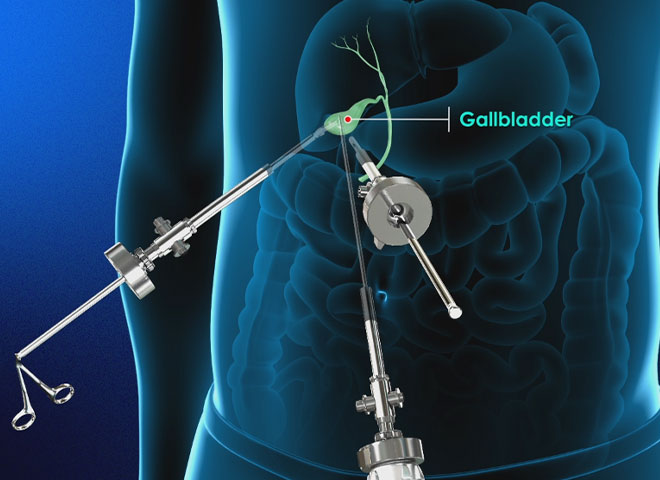
Laparoscopic cholecystectomy is the surgical removal of the gallbladder through tiny "keyhole" incisions — 3 to 4 cuts, each just 3–10 mm in size. A miniature HD camera called a laparoscope is inserted through one incision, projecting a magnified, high-definition video of the internal organs onto a monitor. Dr. Raman Garg then uses specially designed long instruments through the other incisions to carefully free the gallbladder from surrounding structures and remove it through the navel (umbilical) incision.
First performed in 1987 in France, laparoscopic cholecystectomy has become one of the most commonly performed surgeries in the world — with over 750,000 procedures done annually in the USA alone. In India, it is now the standard of care, having replaced open (traditional) gall bladder surgery in the vast majority of cases.
At BGCI Bathinda, Dr. Raman Garg performs all laparoscopic cholecystectomies using a four-trocar technique with HD laparoscopy, providing superior visualization and precision — even in complex cases like acute cholecystitis, contracted gallbladder, or Mirizzi syndrome.
Laparoscopic vs. Open Gall Bladder Surgery — A Complete Comparison
| Comparison |
✅ Laparoscopic (Dr. Raman Garg) |
Open Surgery |
| Incision Size |
3–4 tiny holes (3–10 mm each) |
One large cut (12–20 cm) |
| Post-op Pain |
Minimal — most patients need only mild analgesics |
Significant — strong painkillers required for days |
| Hospital Stay |
Same-day or next day discharge |
5–7 days minimum |
| Recovery Time |
Return to light work in 3–5 days; full recovery in 1–2 weeks |
4–6 weeks before returning to work |
| Cosmetic Result |
3–4 tiny scars, barely visible |
Long, prominent scar |
| Blood Loss |
Very minimal (< 20 ml typically) |
Considerably more |
| Infection Risk |
Very low (< 1%) |
Higher (2–5%) |
| Adhesion Risk |
Minimal |
Higher — greater risk of future bowel obstruction |
| Anesthesia Duration |
45–75 minutes typically |
1.5–3 hours typically |
| Return to Normal Diet |
Within 24–48 hours |
Several days of restricted diet |
| Patient Satisfaction |
Extremely high |
Moderate — more discomfort and limitations |
The Complete Gall Bladder Surgery Procedure at BGCI — What to Expect
Step 1 — Initial Consultation and Diagnosis
Your journey begins with a consultation with Dr. Raman Garg. He will take a detailed history of your symptoms, examine your abdomen, and review your investigation reports. If not already done, he will order:
- Ultrasound abdomen: The primary investigation to detect gallstones, assess gallbladder wall thickness, and look for bile duct dilatation
- Liver Function Tests (LFT): To check if bile duct obstruction has affected liver function
- Complete Blood Count (CBC): To detect infection (elevated white cell count)
- Serum amylase and lipase: To rule out pancreatitis
- MRCP (Magnetic Resonance Cholangiopancreatography): If bile duct stones are suspected — provides a detailed map of the bile ducts without radiation or contrast dye
Step 2 — Pre-Operative Preparation
- Pre-anesthetic checkup: blood tests (CBC, coagulation profile, blood sugar, kidney function), ECG, chest X-ray
- Discussion with anesthesiologist
- Fasting: nothing to eat or drink from midnight the night before surgery (NPO protocol)
- Stop blood-thinning medications (aspirin, warfarin, clopidogrel) at least 5–7 days before surgery as advised by Dr. Raman Garg
- Bathe with antiseptic soap the night before and morning of surgery
- Remove nail polish, jewelry, and contact lenses before coming to the hospital
Step 3 — The Surgery Itself (45–90 Minutes)
- You are taken to the operation theatre and positioned comfortably on the operating table
- General anesthesia is administered — you are completely unconscious and feel nothing
- A small needle is used to introduce carbon dioxide (CO₂) gas into the abdomen, gently inflating it to create a working space (pneumoperitoneum)
- Four small incisions (one at the navel, three in the upper abdomen) are made
- The laparoscope is inserted through the umbilical port — Dr. Raman Garg gets a real-time HD view of your abdominal cavity
- The gallbladder is carefully freed from surrounding structures — the liver, common bile duct, and hepatic artery are identified and protected at all times
- The cystic duct (connecting the gallbladder to the bile duct) and cystic artery are secured with surgical clips and divided
- The gallbladder is placed in a retrieval bag and extracted through the umbilical incision
- The incisions are closed with absorbable sutures — no suture removal is needed in most cases
- A sterile dressing is applied
Step 4 — Recovery Room (2–4 Hours)
- You wake up in the recovery room under close nursing observation
- Vital signs (blood pressure, pulse, oxygen saturation) are monitored continuously
- IV fluids and appropriate pain relief are administered
- You may experience mild soreness at the incision sites and some shoulder discomfort from the CO₂ gas — this is completely normal and resolves in 24–48 hours
- Once fully awake and stable, you are shifted to your room
Step 5 — Post-Operative Care (24–48 Hours in Hospital)
- You can start sipping water 3–4 hours after surgery
- Liquid diet (soup, dhal water, coconut water) started the same evening
- Light soft foods started the following morning
- Most patients are discharged within 24 hours in uncomplicated cases
- Prescription for mild pain relief (paracetamol or ibuprofen) given
- Wound dressing instructions and follow-up appointment scheduled
Life After Gall Bladder Surgery — Everything You Need to Know
Can You Eat Normally After Gall Bladder Removal?
Yes — the vast majority of patients eat completely normally after gall bladder surgery once fully recovered. Here's what to expect in the different phases:
First Week After Surgery (Recovery Diet)
- Stick to low-fat, easily digestible foods: dal, khichdi, rice, boiled vegetables, fruits, curd (low-fat), soups
- Avoid fried, oily, spicy, and heavy foods completely during the first week
- Eat small, frequent meals (5–6 small meals rather than 3 large ones)
- Stay well-hydrated — at least 8–10 glasses of water daily
- Some patients experience mild loose stools or more frequent bowel movements initially — this is normal and usually resolves within a few weeks
Weeks 2–6 (Transition Phase)
- Gradually reintroduce foods — add one new food at a time
- Introduce lean protein: eggs, fish, chicken (boiled/grilled — not fried)
- Continue to avoid heavy fried foods, red meat, and spicy curries until 6 weeks post-surgery
- Limit caffeine and alcohol for the first month
After 6 Weeks — Normal Diet Restored
After about 6 weeks, most patients can return to a completely normal diet with no restrictions. However, adopting a healthy eating pattern — less fried food, more fiber, less refined sugar — is always beneficial for long-term digestive health.
Post-Cholecystectomy Syndrome — Rare but Real
A small percentage of patients (5–10%) experience ongoing digestive symptoms after cholecystectomy — including loose stools, bloating, or mild abdominal discomfort. This is called Post-Cholecystectomy Syndrome (PCS). Most cases improve with dietary adjustments and are managed with simple medications. Dr. Raman Garg will monitor your recovery and address any such concerns during follow-up appointments.
Activity Restrictions and Return to Normal Life
- Walking: Start short, gentle walks from Day 1 after surgery — promotes recovery and prevents clot formation
- Driving: Avoid driving for 5–7 days or as long as you are on pain medication
- Light work (desk job, laptop): Resume in 3–5 days
- Physical work (lifting, bending): Avoid for 2–3 weeks
- Gym / heavy exercise: Resume after 4–6 weeks with Dr. Raman Garg's clearance
- Swimming / bathing the wound: Keep wound dry for 1 week; gentle bathing after 48 hours is fine but pat dry
- Sexual activity: Resume after 1–2 weeks as comfort permits
When Should You Call the Doctor After Surgery?
- Fever above 38°C that persists beyond 48 hours post-surgery
- Increasing pain at wound sites rather than decreasing
- Wound redness, swelling, warmth, or discharge from the wound
- Yellowing of the eyes or skin (jaundice) — may indicate bile duct injury or retained stone
- Severe, worsening abdominal pain after initially feeling better
- Inability to keep food or water down (persistent vomiting)
- No bowel movement for more than 3–4 days with bloating
- Signs of blood clot in leg — calf pain, swelling, warmth (DVT)
Special Situations — Complex Gall Bladder Cases
Dr. Raman Garg is experienced in handling complex and difficult gall bladder cases that many surgeons prefer to convert to open surgery:
- Acute cholecystitis (infected gallbladder): Dr. Raman Garg performs emergency laparoscopic cholecystectomy within 72 hours of symptom onset — the evidence-based gold standard for acute cholecystitis. Early surgery prevents recurrence and reduces complication rates compared to "cooling down" and delayed surgery.
- Contracted, fibrotic gallbladder: Years of chronic inflammation can cause the gallbladder to shrink and adhere to surrounding structures. Requires careful, meticulous dissection — a skill Dr. Raman Garg has honed over thousands of procedures.
- Common bile duct stones (choledocholithiasis): When a stone has also passed into the common bile duct, Dr. Raman Garg may perform ERCP (Endoscopic Retrograde Cholangiopancreatography) before laparoscopic cholecystectomy to clear the duct — or in select cases, perform laparoscopic common bile duct exploration in the same sitting.
- Gallbladder polyps ≥10 mm: These require cholecystectomy due to malignant potential. Dr. Raman Garg sends all specimens for histopathological analysis to rule out cancer.
- Gallstone pancreatitis: After the initial pancreatitis episode settles, laparoscopic cholecystectomy is performed during the same admission to prevent recurrent pancreatitis — which can be life-threatening.
- Cirrhosis-associated gallstones: These require special expertise due to higher bleeding risk and altered anatomy — best managed by a hepato-biliary specialist like Dr. Raman Garg.
Gallbladder Surgery Cost in Bathinda — Affordable, Transparent Pricing
At BGCI Bathinda, we believe that world-class surgical care should be affordable and accessible to everyone. We follow a completely transparent pricing policy with no hidden costs. The cost of laparoscopic gall bladder surgery at BGCI depends on the type of surgery (elective vs. emergency), any associated procedures (like ERCP for bile duct stones), and the package chosen (surgery only, or with pre-operative investigations).
We work with most major health insurance providers and can assist with cashless claims. For exact pricing tailored to your situation, please call +91 82641-60001 or visit the hospital for a consultation.
Compared to metro cities like Delhi, Chandigarh, or Ludhiana, BGCI Bathinda offers significant cost savings without any compromise on quality. Our surgical outcomes match those of the best hospitals in the country.
Why BGCI Bathinda is the Right Choice for Your Gall Bladder Surgery
Choosing the right surgeon and hospital for gall bladder surgery is one of the most important decisions you'll make. Here's why thousands of patients across Punjab and neighboring states trust BGCI:
- Dr. Raman Garg — FMAS, MS: Fellowship in Minimal Access Surgery, with 20+ years of dedicated laparoscopic experience. Has performed thousands of cholecystectomies including complex emergency cases.
- State-of-the-art operation theatre: Equipped with high-definition 4K laparoscopic tower, advanced energy devices (LigaSure, harmonic scalpel), and modern anesthesia equipment.
- Dedicated OT nursing team: Our experienced OT nurses and technicians specialize in laparoscopic procedures — ensuring smooth, efficient surgeries.
- ICU backup: For complex cases requiring post-operative intensive monitoring.
- 24x7 emergency services: Acute cholecystitis doesn't wait for OPD hours. Dr. Raman Garg is available for emergency consultations round the clock.
- Personalized post-operative care: Detailed discharge instructions, dietary counseling, follow-up schedule — we don't just perform surgery; we see you through complete recovery.
- Patient testimonials speak for themselves: Over 500+ Google reviews with an average rating of 4.8/5 — reflecting the quality of care and patient satisfaction at BGCI.
Real Patient Stories — Gall Bladder Surgery at BGCI Bathinda
"I had been suffering from gall bladder pain for almost 2 years, avoiding surgery out of fear. My family doctor referred me to Dr. Raman Garg at BGCI. He explained everything so clearly — I felt at ease immediately. The surgery lasted less than an hour, I went home the next morning, and I was back to my normal routine within 10 days. The scars are barely visible. I wish I hadn't waited so long!"
S
Sunita SharmaPatient, 42 yrs · Mansa, Punjab
★★★★★
"I was admitted as an emergency with acute cholecystitis. Dr. Raman Garg operated on me within 24 hours. Despite the complexity of my case (the gallbladder was very inflamed), he completed it laparoscopically without converting to open. I'm forever grateful for his skill and the team's care."
R
Rajinder SinghPatient, 55 yrs · Faridkot, Punjab
★★★★★
Gall Bladder Surgery FAQ
01
How do I know if I need gall bladder surgery?
If you have symptomatic gallstones — meaning gallstones confirmed on ultrasound AND causing symptoms (biliary colic, nausea, intolerance to fatty foods, or fever) — surgery is strongly recommended. Even "silent" (asymptomatic) gallstones may require surgery if they are large (> 3 cm), if you have diabetes or a weakened immune system, or if there is a suspicion of gallbladder cancer (e.g., gallbladder polyp > 10 mm, or porcelain gallbladder). Dr. Raman Garg will evaluate your specific situation and give you an honest recommendation.
02
Is laparoscopic gall bladder surgery safe?
Yes — laparoscopic cholecystectomy is one of the safest surgeries performed worldwide. The overall complication rate is less than 2%, and serious complications like bile duct injury occur in less than 0.5% of cases in experienced hands. Dr. Raman Garg's track record of thousands of successful procedures at BGCI makes the risk even lower. The benefits of surgery for symptomatic gallstones far outweigh the risks of leaving the condition untreated.
03
How long is recovery after laparoscopic gall bladder surgery?
Recovery is remarkably quick compared to open surgery. Most patients are discharged within 24 hours, return to light daily activities (walking, household chores, desk work) within 3–5 days, and can resume full normal activities including physical work within 2–3 weeks. Return to gym or strenuous exercise is advised after 4–6 weeks.
04
What diet should I follow after gall bladder surgery?
For the first week: low-fat, easily digestible foods — dal, khichdi, boiled vegetables, fruits, soups, low-fat curd. Avoid fried, oily, spicy, and heavy foods. From week 2 onwards, gradually reintroduce more foods — lean protein (boiled chicken/fish/eggs), whole grains, vegetables. After 6 weeks, most patients can eat a normal, healthy diet with no specific restrictions. The key is to avoid excessive fried and fatty foods as a general healthy lifestyle practice.
05
Can gallstones come back after surgery?
No. Once the gallbladder is completely removed, gallstones cannot reform because there is no gallbladder left to store bile. Bile flows directly from the liver into the small intestine. Occasionally, stones can form in the bile duct (choledocholithiasis) after surgery — this is uncommon and, if it occurs, is managed with ERCP (an endoscopic procedure that does not require another surgery).
06
Will I need to take any long-term medications after gall bladder surgery?
In most cases, no. Some patients who experience post-cholecystectomy syndrome (mild digestive symptoms) may need short-term medications like anti-diarrheal agents or bile acid binders, but these are usually not long-term needs. Most patients lead completely medication-free lives after complete recovery.
07
Is there an age limit for laparoscopic gall bladder surgery?
No specific age limit. Dr. Raman Garg has successfully performed laparoscopic cholecystectomies on patients ranging from teenagers to elderly patients in their 80s. The anesthesia risk in older patients is evaluated individually through pre-operative assessment. With modern anesthesia and minimally invasive technique, even elderly and high-risk patients typically tolerate the procedure well.
08
What is the difference between a laparoscopic surgeon and a general surgeon for gall bladder surgery?
A general surgeon may perform gall bladder surgery, but a specialist in minimal access surgery (MAS) like Dr. Raman Garg — who holds an FMAS certification — has advanced, dedicated training and hands-on experience specifically in laparoscopic techniques. This translates to faster, safer surgery, lower complication rates, and better outcomes, especially in complex cases. Always choose a surgeon with dedicated laparoscopic experience for this procedure.