Laparoscopic Hiatus Hernia Surgery in Bathinda — Expert Fundoplication by Dr. Raman Garg
A hiatus hernia occurs when part of the stomach pushes upward through the diaphragm — the muscular partition separating the chest and abdomen — through the hiatus (the opening through which the esophagus passes). This anatomical defect often leads to or worsens gastroesophageal reflux disease (GERD) by weakening the lower esophageal sphincter.
At Bombay Gastro & Cancer Institute (BGCI) in Bathinda, Dr. Raman Garg performs state-of-the-art laparoscopic hiatus hernia repair with fundoplication — the definitive surgical treatment that permanently corrects the anatomical defect and provides lasting relief from acid reflux symptoms in over 90% of patients.
Types of Hiatus Hernia
- Type I — Sliding Hiatal Hernia — Most common (95%); the gastroesophageal junction slides in and out of the chest through the hiatus; usually associated with GERD
- Type II — Rolling/Para-esophageal Hernia — The GEJ stays in place but the fundus of the stomach rolls up into the chest alongside the esophagus; can cause more severe symptoms
- Type III — Mixed — Combination of Type I and II
- Type IV — Large hernia with additional organs (colon, small bowel, spleen) in the chest
Symptoms of Hiatus Hernia
- Chronic, frequent heartburn (burning in chest/throat) — especially after meals and when lying down
- Acid regurgitation — sour or bitter taste in mouth
- Difficulty swallowing (dysphagia)
- Chest pain — can mimic cardiac pain
- Chronic cough — particularly at night (acid reaching the throat)
- Hoarseness and voice changes
- Belching and bloating
- Nausea, especially in the morning
- Feeling of fullness after small amounts of food
- In large para-esophageal hernias: severe chest pain, vomiting, difficulty breathing (emergency)
Diagnosis at BGCI Bathinda
- Upper GI Endoscopy (OGD Scopy) — First-line investigation; identifies the hernia, assesses esophagitis, Barrett's esophagus
- Barium Swallow — Shows size and type of hernia radiologically
- CT Scan Chest/Abdomen — Excellent for large/complex hernias; identifies herniated organs
- Esophageal Manometry — Measures LES pressure and esophageal motility (important for surgical planning)
- 24-hour pH Monitoring — Documents acid exposure in the esophagus
When is Surgery Recommended?
- GERD refractory to maximum medical therapy (PPIs, lifestyle changes)
- Patient preference — unwillingness to take lifelong medications
- Large hiatus hernia (>5 cm) regardless of symptoms
- All para-esophageal (Type II/III/IV) hernias — due to risk of complications
- Complications of GERD: severe esophagitis, peptic stricture, Barrett's esophagus
- Intrathoracic stomach (acute on chronic presentation)
- Young patients who don't want lifetime medication dependency
Laparoscopic Hiatus Hernia Repair & Nissen Fundoplication
The standard surgical procedure is laparoscopic hiatus hernia repair with Nissen fundoplication:
Key Steps of the Procedure
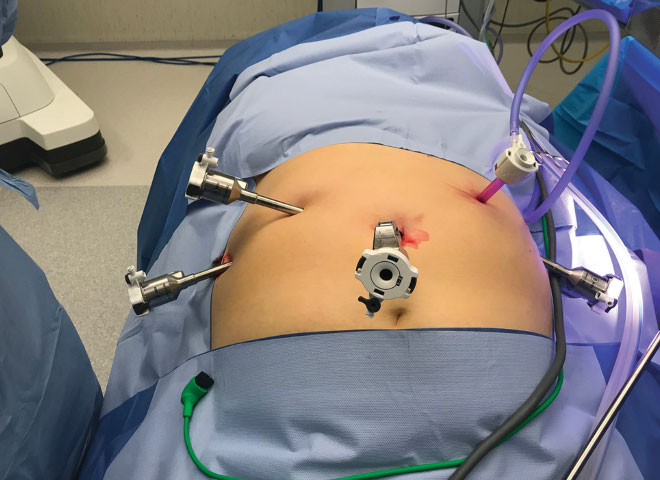
- 5 small incisions (5–12 mm) in the upper abdomen
- The herniated stomach is reduced from the chest back into the abdomen
- The hiatus (opening in the diaphragm) is repaired with sutures (cruroplasty) — with mesh reinforcement for large defects
- Nissen fundoplication: the upper part of the stomach (fundus) is wrapped 360° around the lower esophagus, recreating an effective anti-reflux valve
- In selected cases, a partial (Toupet 270° or Dor 180°) fundoplication is preferred to reduce side effects
Procedure Duration & Hospital Stay
- Operating time: 90–150 minutes
- Hospital stay: 2–3 days
- Return to light activities: 1–2 weeks
- Return to normal diet (with temporary restrictions): progressive over 6–8 weeks
- Return to full activity: 4–6 weeks
Results of Laparoscopic Fundoplication
- Over 90% of patients have complete relief of heartburn and regurgitation
- Most patients able to stop acid-suppressing medications entirely
- Dysphagia (difficulty swallowing) typically resolves
- Excellent long-term results — 80–85% patients still satisfied at 10 years
- Post-fundoplication symptoms: temporary bloating, gas, and difficulty belching — improve over 3–6 months
Why Choose Dr. Raman Garg for Hiatus Hernia Surgery in Bathinda?
- Comprehensive pre-surgical work-up including manometry — selecting the right fundoplication type for optimal outcome
- Experience with both Nissen (360°) and partial fundoplication techniques
- Large hernia repair with mesh reinforcement when appropriate
- Detailed pre- and post-operative dietary guidance
- Close follow-up to ensure optimal recovery
- Serving patients from Bathinda and all surrounding districts