Stomach Cancer Treatment in Bathinda — Expert Gastric Cancer Care at BGCI
Stomach cancer (gastric cancer) is the fifth most common cancer globally and the third leading cause of cancer-related deaths. In India, it is among the most common gastrointestinal cancers, particularly affecting people above 50 years of age. Early detection significantly improves outcomes, but unfortunately, stomach cancer is often diagnosed at advanced stages due to non-specific early symptoms.
At Bombay Gastro & Cancer Institute (BGCI) in Bathinda, the unique combination of Dr. Raman Garg's expertise in gastroenterology and laparoscopic surgery, and Dr. Manjit Jaura's 20+ years of oncological expertise, ensures that stomach cancer patients receive the most comprehensive, coordinated care available in south Punjab — without having to travel to distant cities.
Understanding Stomach Cancer
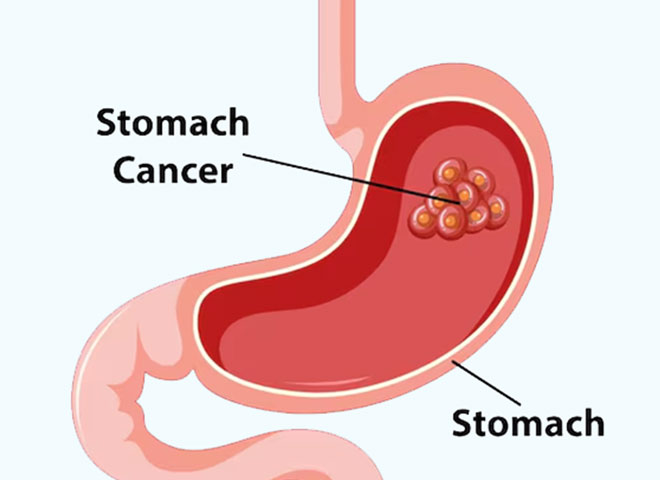
Stomach cancer most commonly arises from the inner lining of the stomach (mucosa). The most common type is adenocarcinoma (90–95% of cases). Other types include gastric lymphoma, gastrointestinal stromal tumors (GIST), and carcinoid tumors.
Stomach Cancer Locations
- Cardia/GEJ (Gastroesophageal Junction) — Where esophagus meets stomach; linked to GERD and Barrett's esophagus
- Body of Stomach — Most common location; often linked to H. pylori infection
- Antrum/Pylorus — Lower stomach near the small intestine
Risk Factors for Stomach Cancer
- Helicobacter pylori (H. pylori) infection — The single most important risk factor; causes chronic gastritis → gastric atrophy → intestinal metaplasia → cancer
- Diet — High salt intake; smoked, preserved, or processed foods; low fruit and vegetable intake
- Tobacco and Alcohol — Both significantly increase risk
- Family history — First-degree relatives with gastric cancer
- Hereditary Diffuse Gastric Cancer (HDGC) — CDH1 gene mutation; carries 80% lifetime risk
- Previous gastric surgery — Billroth II partial gastrectomy increases risk after 15+ years
- Pernicious anemia — Autoimmune gastritis with B12 deficiency
- Chronic atrophic gastritis with intestinal metaplasia — Precancerous condition
- Obesity — For cardia/GEJ cancers specifically
Symptoms of Stomach Cancer
Early Symptoms (Often Non-Specific)
- Persistent indigestion and discomfort after eating
- Feeling of fullness after small meals (early satiety)
- Mild nausea and loss of appetite
- Upper abdominal pain or discomfort
- Heartburn or acid reflux not responding to usual medications
Late Symptoms (Often Present at Diagnosis in India)
- Significant unintentional weight loss
- Persistent vomiting — especially after eating
- Blood in vomit (hematemesis) or black tarry stools (melena)
- Difficulty swallowing (dysphagia) — cardia cancers
- Jaundice (rare; indicates spread to liver)
- Abdominal swelling (ascites from peritoneal spread)
- Palpable abdominal mass
- Severe fatigue and weakness from anemia
Don't Ignore These Warning Signs
If you have persistent indigestion, unexplained weight loss, difficulty eating, or blood in vomit — consult Dr. Raman Garg or Dr. Manjit Jaura at BGCI Bathinda immediately. Early gastric cancer is curable in over 90% of cases. Don't attribute symptoms to "just acidity" without proper evaluation.
Diagnosis & Staging of Stomach Cancer at BGCI
Accurate staging determines the treatment approach and prognosis:
- Upper GI Endoscopy (OGD Scopy) — Gold standard; direct visualization; biopsy of suspicious lesions; multiple biopsies from different areas
- Endoscopic Ultrasound (EUS) — Determines depth of tumor invasion (T stage) and regional lymph node involvement (N stage) — crucial for surgical planning
- CT Scan Chest/Abdomen/Pelvis — Assesses regional spread, lymph nodes, and distant metastases (liver, peritoneum, lungs)
- PET-CT Scan — Metabolically active disease; detects occult metastases
- Diagnostic Laparoscopy — Rules out peritoneal spread not visible on CT; peritoneal washing cytology
- Tumor Markers — CEA, CA 19-9, CA 72-4 — baseline and follow-up
- HER2 Testing — On tumor biopsy; HER2+ advanced gastric cancer responds to trastuzumab
Stomach Cancer Treatment at BGCI Bathinda
Stage I — Early Gastric Cancer
- Endoscopic Submucosal Dissection (ESD) — For very superficial (T1a) cancers; endoscopic removal without surgery; highly specialized
- Laparoscopic Gastrectomy — For T1b cancers; minimally invasive stomach removal with lymph node dissection; excellent outcomes
- 5-year survival: >90%
Stage II–III — Locally Advanced Gastric Cancer
- Neoadjuvant Chemotherapy (FLOT/ECF/ECX) — Increasingly standard; 3 cycles before surgery to shrink tumor and eliminate micrometastases
- Radical Gastrectomy with D2 Lymphadenectomy — Gold standard surgery; removes the tumor-bearing part of the stomach (subtotal or total gastrectomy) with all surrounding lymph nodes
- Adjuvant Chemotherapy/Chemoradiotherapy — After surgery to eradicate residual microscopic disease
- 5-year survival: Stage II 40–60%; Stage III 15–35%
Stage IV — Metastatic Gastric Cancer (Palliative)
- Palliative Chemotherapy — Extends life and maintains quality; doublet (5-FU/capecitabine + platinum) or triplet regimens; trastuzumab for HER2+
- Palliative Surgery — Gastroenterostomy for gastric outlet obstruction; stenting for dysphagia
- Immunotherapy — Nivolumab, pembrolizumab for PD-L1+ tumors in 2nd+ line
- Best Supportive Care — Pain management, nutritional support, psychological support
Recovery After Gastrectomy
- Hospital stay: 7–14 days after major gastrectomy
- Feeding: NGT/jejunal feeding tube initially; sips of water from day 3–5; liquid diet by week 2
- Eating: Small, frequent meals (6–8 per day) essential — the remaining stomach is much smaller
- Vitamin B12 injections — required after total gastrectomy (lifelong)
- Iron, folate, vitamin D supplementation
- Dumping syndrome — managed with dietary adjustments
- Regular follow-up with CT and tumor markers
Helicobacter Pylori Eradication — Cancer Prevention
H. pylori eradication is the most effective proven strategy for preventing gastric cancer in infected individuals. Dr. Raman Garg detects H. pylori through endoscopy biopsy (rapid urease test, histology) or non-invasive UBT (urea breath test) and treats with triple or quadruple antibiotic regimens. In high-risk patients with precancerous conditions (intestinal metaplasia), regular surveillance endoscopy is recommended.
Why Choose BGCI Bathinda for Stomach Cancer Treatment?
- Unique combination: gastroenterologist (Dr. Raman Garg) + senior oncologist (Dr. Manjit Jaura) for comprehensive care
- Advanced endoscopic services for early detection and staging
- Multidisciplinary tumor board approach to complex cases
- Coordination with medical and radiation oncologists
- Compassionate care and honest communication at every stage
- Serving patients from Bathinda and all surrounding districts of Punjab and Haryana
Stomach Cancer FAQ
01
Is stomach cancer curable?
Yes — if caught early. Stage I gastric cancer has a 5-year survival rate of over 90%. Stage II: 50–70%. Early detection through prompt evaluation of symptoms and H. pylori testing is critical. Unfortunately, in India many patients present at advanced stages, making treatment more challenging but not hopeless.
02
Can stomach cancer be prevented?
Yes. Eradicating H. pylori infection (the #1 risk factor) significantly reduces risk. Adopting a healthy diet rich in fruits and vegetables, reducing salt intake, avoiding smoked/preserved foods, stopping tobacco and limiting alcohol are all protective. Treating precancerous conditions (intestinal metaplasia) with regular surveillance further reduces risk.
03
What happens to eating after stomach surgery?
After partial gastrectomy, patients adapt to eating smaller, more frequent meals. After total gastrectomy, the same applies but more strictly — typically 6–8 small meals per day. Lifelong vitamin B12 injections are required after total gastrectomy. Most patients ultimately achieve good nutritional status with appropriate dietary guidance.
04
What is the role of H. pylori in stomach cancer?
H. pylori is a bacterium that infects the stomach lining of about 50% of the world's population. Chronic infection causes progressive inflammation: gastritis → atrophy → intestinal metaplasia → dysplasia → cancer. Eradicating H. pylori halts this progression and reduces gastric cancer risk by 30–50%.